英鎊/美元預測:英鎊在關鍵阻力位附近交易
- 英鎊/美元在周一錄得小幅上漲,此前在周初開盤時出現看跌走勢。
- 如果英鎊/美元突破1.2450阻力位,技術買家可能會採取行動。
- 如果投資者在當天晚些時候變得謹慎,該貨幣對的上行可能會受到限制。


周一早些時候跌至兩週低點1.2250後,英鎊/美元反轉方向,收盤略高。周二早些時候,該貨幣對在窄幅區間內交易,略低於1.2450。
美元 價格 本周
下表顯示了 美元 (USD) 對所列主要貨幣 本周的變動百分比。 美元 對 歐元 最強。
| USD | EUR | GBP | JPY | CAD | AUD | NZD | CHF | |
|---|---|---|---|---|---|---|---|---|
| USD | 0.23% | -0.23% | 0.20% | -1.83% | 0.08% | -0.25% | -0.69% | |
| EUR | -0.23% | -0.06% | 1.28% | -0.77% | 0.31% | 0.83% | 0.38% | |
| GBP | 0.23% | 0.06% | 0.25% | -0.71% | 0.38% | 0.90% | 0.44% | |
| JPY | -0.20% | -1.28% | -0.25% | -2.04% | 0.02% | 0.46% | -0.27% | |
| CAD | 1.83% | 0.77% | 0.71% | 2.04% | 0.84% | 1.61% | 1.16% | |
| AUD | -0.08% | -0.31% | -0.38% | -0.02% | -0.84% | 0.51% | 0.06% | |
| NZD | 0.25% | -0.83% | -0.90% | -0.46% | -1.61% | -0.51% | -0.45% | |
| CHF | 0.69% | -0.38% | -0.44% | 0.27% | -1.16% | -0.06% | 0.45% |
熱圖顯示了主要貨幣相對於其他貨幣的百分比變化。基礎貨幣從左列中選取,而報價貨幣從頂部行中選取。例如,如果您從左列選擇 美元 竝沿著水平線移動到 日元 ,則框中顯示的百分比變化將表示 USD (基數)/ JPY (報價)。
周一下午風險情緒改善,迫使美元(USD)抹去日內漲幅,幫助英鎊/美元進行決定性反彈。
加拿大總理賈斯廷·特魯多表示,美國總統唐納德·特朗普已同意將對加拿大進口商品的關稅推遲至少30天。此外,墨西哥總統克勞迪婭·謝恩鮑姆宣布,美國將暫停對墨西哥進口商品的關稅30天,讓投資者鬆了一口氣。
周二早些時候,美國股指期貨日內小幅走低,表明投資者避免將自己置於反彈風險的境地。
當天晚些時候,美國勞工統計局將公佈12月份的JOLTS職位空缺數據。市場預計職位空缺數量約為800萬。如果讀數明顯高於預期,達到或超過850萬,可能會提振美元並拖累英鎊/美元走低。
英鎊/美元技術分析
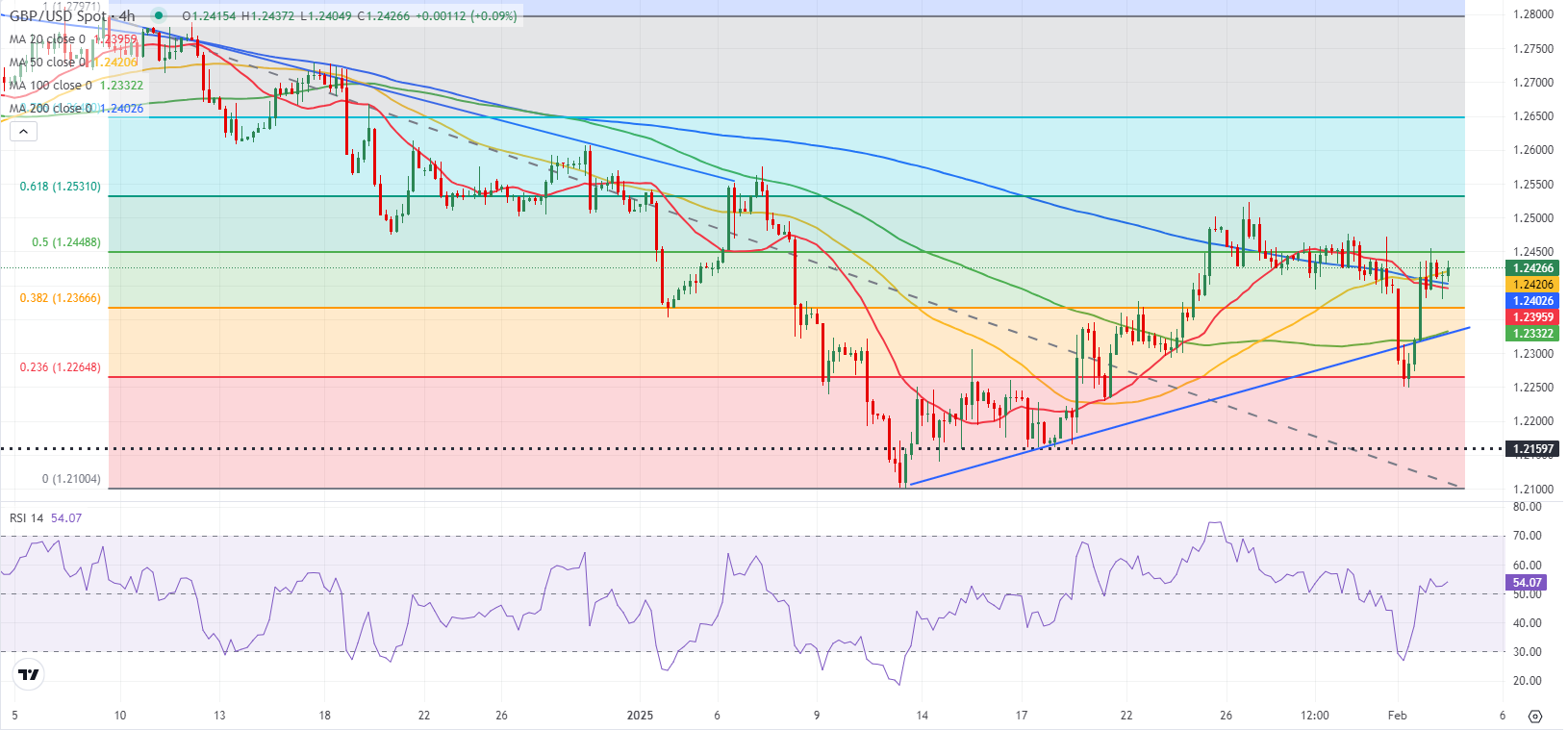
4小時圖上的相對強弱指數(RSI)指標略高於50,英鎊/美元穩定在上升趨勢線上方,反映出賣方興趣不足。
上行方面,1.2450(最新下跌趨勢的50%斐波那契回撤位)作為第一個阻力位,然後是1.2500(整數關口,靜態水平)和1.2530(61.8%斐波那契回撤位)。向南看,支撐位可能在1.2400(200週期簡單移動平均線(SMA))、1.2370(38.2%斐波那契回撤位)和1.2330(100週期SMA,上升趨勢線)。
英鎊 FAQs
英鎊(GBP)是世界上最古老的貨幣(公元886年),也是英國的官方貨幣。根據2022年的數據,它是全球第四大外匯交易單位,占所有交易的12%,平均每天6300億美元。它的主要交易對是英鎊/美元,也被稱為「Cable」,占外匯的11%,英鎊/日元,或被交易員稱為「龍(Dragon)」(3%),歐元/英鎊(2%)。英鎊由英格蘭銀行(BoE)發行。
「影響英鎊價值的唯一最重要的因素是英格蘭銀行決定的貨幣政策。英國央行的決定是基於它是否實現了「物價穩定」的主要目標——穩定在2%左右的通脹率。實現這一目標的主要工具是調整利率。當通脹過高時,英國央行將試圖通過提高利率來控製通脹,從而提高個人和企業獲得信貸的成本。這總體上對英鎊有利,因為更高的利率使英國成為對全球投資者更具吸引力的投資場所。當通脹降得太低時,這是經濟增長放緩的跡象。在這種情況下,英國央行將考慮降低利率以降低信貸成本,這樣企業就會借入更多資金,投資於促進增長的項目。」
「公布的數據可以衡量經濟的健康狀況,並可能影響英鎊的價值。GDP、製造業和服務業pmi以及就業等指標都可以影響英鎊的走勢。強勁的經濟有利於英鎊。這不僅會吸引更多的外國投資,還可能鼓勵英國央行提高利率,這將直接推高英鎊。否則,如果經濟數據疲軟,英鎊可能會下跌。」
「英鎊的另一個重要數據是貿易帳。該指標衡量的是一個國家在一定時期內出口收入與進口支出之間的差額。如果一個國家生產非常受歡迎的出口產品,其貨幣將純粹受益於尋求購買這些商品的外國買家所創造的額外需求。因此,凈貿易余額為正會使貨幣走強,反之亦然。」
作者
Eren Sengezer
FXStreet
As an economist at heart, Eren Sengezer specializes in the assessment of the short-term and long-term impacts of macroeconomic data, central bank policies and political developments on financial assets.





