市場情緒不穩,美元/印度盧比持穩
- 印度盧比週一在美元走強的背景下表現平平。
- 對聯準會降息和印度外資流出的押注降低可能會支撐該貨幣對。
- 印度和美國 5 月份消費者物價指數(CPI)將於週三公佈。


儘管美元反彈,但印度盧比(INR)週一表現平平。印度經濟復甦和金融穩定的積極前景可能會為印度盧比提供一些支撐。然而,美國 5 月強勁的就業數據降低了聯邦公開市場委員會(FOMC)的降息預期,這可能會提振美元對印度盧比的匯率。此外,自 3 月以來,外國投資者淨拋售了價值 4,228.1 億盧比的印度股票,導致印度盧比走軟。
隨著莫迪(Narendra Modi)週日宣誓就職,連續第三次擔任印度總理,投資者將密切關注新政府的組建情況。印度消費者物價指數(CPI)將於週三公佈。美國方面,週三將公佈 CPI 通膨報告,週四將公佈 FOMC 利率決定。
每日摘要市場動態:好壞參半,印度盧比橫盤整理
- 美國銀行(Bank of America)全球新興市場固定收益策略主管 David Hauner表示,與新興市場國家相比,印度盧比穩定且價格低廉,這使其成為套息交易者的最愛。
- 印度儲備銀行(RBI)貨幣政策委員會(MPC)在 6 月的會議上將回購利率維持在 6.5% 不變。
- 由於私人消費成長和農村地區需求復甦,印度儲備銀行將本財年的國內生產毛額成長預期從 7.0% 上調至 7.2%。
- 印度央行行長斯(Shaktikanta Das)表示,儘管印度在維持經濟成長的同時控制了通膨,但食品通膨仍是一個令人擔憂的問題。
- 美國勞工部週五公佈的數據顯示,5月美國經濟創造的就業機會遠超預期,抑制了美國聯邦儲備委員會將於9月開始降息的預期。
- 美國勞工部週五公佈的數據顯示,5月份美國非農就業人數(NFP)從4月的16.5萬(修正後為17.5萬)攀升至27.2萬,高於預期的18.5萬。
- 5 月失業率從 4 月的 3.9% 上升至 4.0%。同時,以平均時薪衡量的薪資通膨率從 4 月的 4.0%(修正後為 3.9%)上升至 5 月的 4.1%,高於市場一致預期的 3.9%。
- 根據 CME FedWatch 工具顯示,期貨交易者目前對 9 月會議降息幾率的定價接近 49%,低於 NFP 數據公佈前的 68%。
技術分析:美元/印度盧比在 100 日均線上方保持看漲態勢
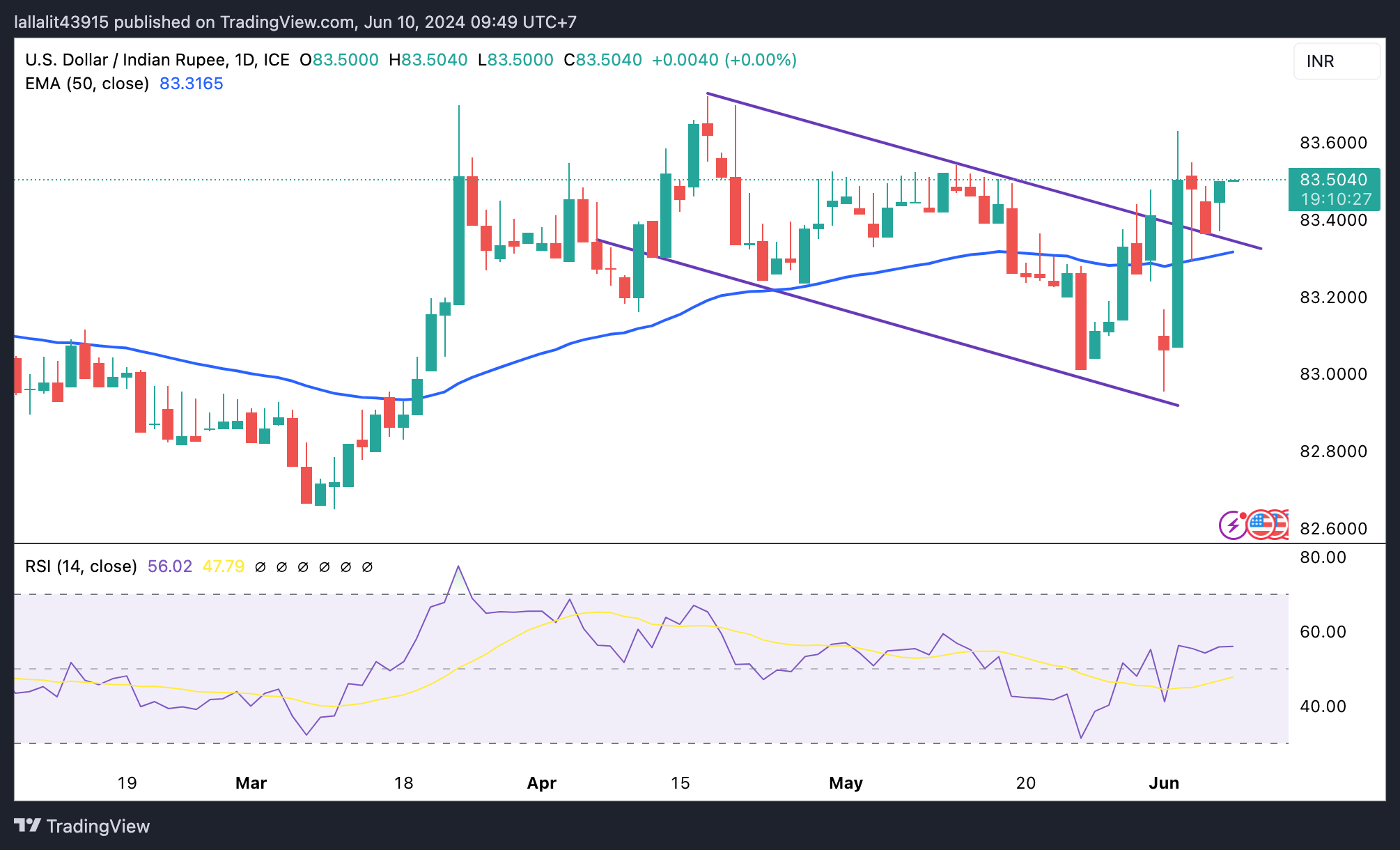
印度盧比當日走強。在日線圖上,美元/印度盧比在下降趨勢通道上邊界和關鍵的100天指數移動平均線(EMA)上方的看漲前景保持完好。由於 14 天相對強弱指數(RSI)向 50 中線低位徘徊,進一步盤整模式看起來有利。
在更強勁的看漲勢頭突破 83.55(6 月 5 日高點)後,該貨幣對可能會上揚至 83.72(4 月 17 日高點),進而觸及 84.00 主要心理關口。
另一方面,阻力位轉為支撐位以及 83.30-83.35 區域的 100 天 EMA 是美元/印度盧比的初步支撐位。任何後續賣盤都可能拖累該貨幣對跌至 83.00 整數關口,然後是 82.78(1 月 15 日低點)。
今日美元價格
下表顯示了今天美元(USD)對上市主要貨幣的百分比變化。美元兌澳幣的匯率最弱。
| 美元 | 歐元 | 英鎊 | 加幣 | 澳幣 | 日圓 | 紐元 | 瑞郎 | |
| 美元 | 0.10% | 0.06% | 0.03% | -0.10% | 0.10% | -0.01% | 0.15% | |
| 歐元 | -0.09% | -0.04% | -0.07% | -0.21% | 0.00% | -0.12% | 0.05% | |
| 英鎊 | -0.07% | 0.04% | -0.03% | -0.17% | 0.03% | -0.09% | 0.09% | |
| 加幣 | -0.04% | 0.07% | 0.03% | -0.14% | 0.08% | -0.05% | 0.11% | |
| 澳幣 | 0.12% | 0.24% | 0.19% | 0.14% | 0.20% | 0.09% | 0.27% | |
| 日圓 | -0.08% | 0.03% | -0.02% | -0.06% | -0.19% | -0.11% | 0.05% | |
| 紐元 | 0.02% | 0.11% | 0.07% | 0.04% | -0.08% | 0.11% | 0.17% | |
| 瑞郎 | -0.14% | -0.05% | -0.08% | -0.12% | -0.25% | -0.05% | -0.15% |
熱圖顯示了主要貨幣之間的百分比變化。基準貨幣從左欄選取,報價貨幣從頂行選取。例如,如果您從左列選擇歐元,然後沿水平線移動到日元,則方框中顯示的百分比變化將代表歐元(基準)/日元(報價)。
作者
FXStreet Team
FXStreet
Composed of a group of economic journalists and FX experts, the FXStreet content team produces and oversees all content published on FXStreet. It provides a purely journalistic approach to the Forex market.





