|

隨著市場對美聯儲加息的押注增加,金價暴跌至一年多來的最低點

  • 隨著市場越來越預期美國利率將走高,黃金需求受到抑制,金價下跌近2%。
  • 交易員等待聯準會10月會議紀要,以獲取有關政策前景的新線索。
  • 隨著黃金/美元接近超賣區域,技術指標顯示金價可能進一步下跌。
隨著市場對美聯儲加息的押注增加,金價暴跌至一年多來的最低點

週三,黃金(XAU/USD)跌破3,800美元,觸及2025年9月以來的最低水平,因交易員越來越預期美聯儲(Fed)將在更長時間內維持較高利率。截至發稿時,黃金/美元交投於3,770美元附近,當日下跌2%。

美國數據表現堅韌,美聯儲官員發表鷹派言論,增強了連續加息的理由。根據芝加哥商品交易所美聯儲觀察工具,12月加息已完全被市場定價,交易員認為明年1月再次加息的概率約為70%。市場還預計2027年晚些時候將進一步收緊政策。

聯準會鷹派官員依靠強勁美國數據維持美元支撐

華僑銀行(OCBC)策略師強調,"10月數據表明,美國經濟在進入2026年第四季度時保持強勁動能",其中"零售銷售月率增長0.2%,對照組增長0.6%,而製造業產出增長0.3%"。他們認為,韌性消費與更強勁生產相結合,"支持美聯儲12月加息25個基點。"

華僑銀行還強調,"美聯儲的言論仍然鷹派",並指出阿爾貝托・穆薩萊姆表示,"2027年春季前可能需要多次加息";與此同時,約翰・威廉姆斯"反對12月加息50個基點,但承認強勁的人工智能投資和需求可能要求進一步收緊政策。"

進一步加息的前景繼續提振美元(USD),並使美債收益率維持高位。衡量美元相對於六種主要貨幣組成的一籃子貨幣表現的美元指數(DXY)升至103.80,為2025年4月以來的最高水平,而10年期美國國債收益率仍穩居5%以上。

美元走強會使使用其他貨幣的買家購買黃金的成本上升,而收益率走高會降低持有這種不支付利息的金屬的吸引力。交易員目前關注定於GMT19:00公布的美聯儲10月會議紀要,以尋找有關進一步加息支持力度的線索。

目前,金價較1月份約5,600美元的歷史高點低逾30%。自美伊戰爭爆發以來,美聯儲預期發生轉變,這成為金價承壓的主要原因。衝突推動能源價格走高,加劇了通脹壓力。

目前,隨著中東出口復甦以及全球供應增加,市場對中東緊張局勢再度升級的擔憂被抵消,油價正承受壓力。不過,由於美聯儲仍專注於將通脹率降回2%的目標,油價走低對黃金的提振作用有限。

技術分析:
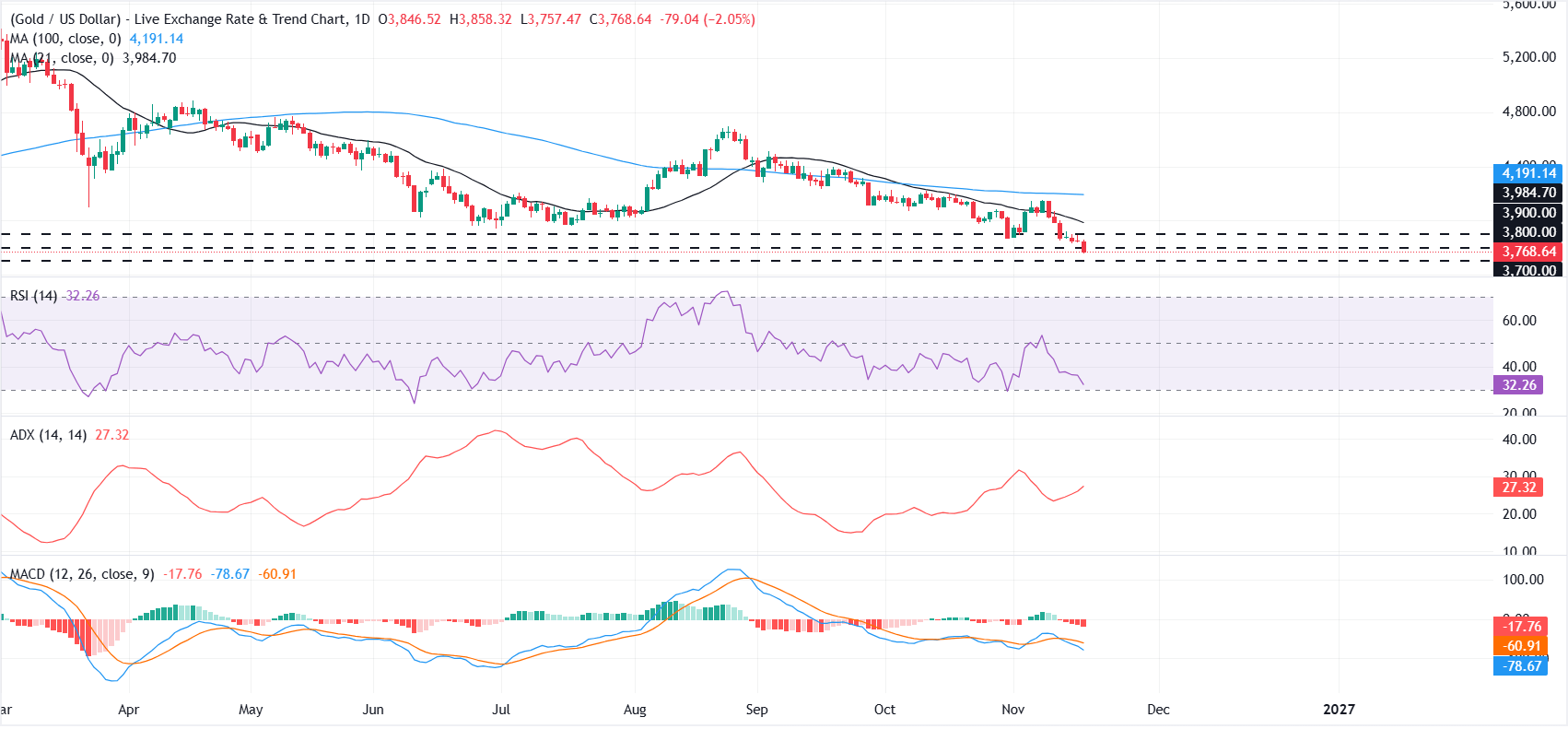
從日線圖來看,黃金/美元交投於3,770.78美元,延續跌勢,並穩穩位於21日簡單移動平均線(SMA)3,984.80美元和100日SMA 4,191.16美元下方,這兩條均線共同強化了主導性的看跌傾向。3,800.00美元和3,900.00美元附近的上方阻力位群目前構成初步阻力,而移動平均線收斂發散指標(MACD)讀數為-17.62,平均趨向指數(ADX)接近27.32,表明下行趨勢正在加強,儘管相對強弱指數(RSI)接近32.35,正逐漸接近超賣區域。

上行方面,初步阻力位於3,800.00美元水平,隨後是3,900.00美元,21日SMA 3,984.80美元和100日SMA 4,191.16美元則構成逐步增強的阻力位,多頭需要重新收復這些水平,才能緩解即時賣壓。下行方面,下一個關鍵支撐位出現在3,700.00美元附近的水平線;若持續跌破這一底部,可能為進一步看跌延伸打開空間,而守住該水平則可能推動金價向附近阻力區間反彈修正。

(本文的技術分析是在人工智慧工具的幫助下撰寫的。了解更多。)

作者

Vishal Chaturvedi

I am a macro-focused research analyst with over four years of experience covering forex and commodities market. I enjoy breaking down complex economic trends and turning them into clear, actionable insights that help traders stay ahead of the curve.


更多來自 Vishal Chaturvedi
分享:

編輯精選

AUD/USD sits at fresh 10-month lows, nears 0.6700

AUD/USD refreshes ten-month lows below 0.6750 and approaches 0.6700 in Wednesday’s Asian session. Fed rate-hike bets, along with fresh exchange of fire between the US and Iran, underpin the safe-haven US Dollar. Furthermore, the RBA’s dovish tilt weighs on the Aussie and the pair.

USD/JPY defends bids near 159.50 on hawkish BoJ Ueda

USD/JPY is defending bids near 159.50 in the Asian session on Wednesday, holding a three-day losing streak after hawkish commentary from BoJ Governor Ueda supports the Japanese Yen amid looming intervention risks. Meanwhile, escalating Middle East tensions revive US Dollar demand amid hawkish Fed bets, which could limit the pair's downside.


Gold stays deep in red below $3,800; Fed Minutes eyed

Gold sticks to intraday losses below the $3,800 mark in the European session on Wednesday, trading close to its lowest level since September 2025. Following last week’s hot US inflation reports, several Federal Reserve officials adopted a more hawkish tone and signaled further interest-rate hikes. Adding to this, Tuesday’s upbeat US data cemented market bets, which continue to act as a tailwind for the US Dollar, and drive flows away from non-yielding bullion.

Bitcoin stalls as ETF outflows mount ahead of Fed Minutes

Bitcoin stalls near $65,000 on Wednesday as buyers struggle to sustain a recovery from last week’s decline toward $62,000. Weakening institutional demand so far this week from BTC spot Exchange Traded Funds continues to weigh on sentiment.

Nvidia offers up double beat in third quarter

Nvidia (NVDA) shares jumped 3% afterhours as the leading AI chipmaker easily surpassed Wall Street's projections for the third quarter. The semiconductor powerhouse posted adjusted earnings per share of $2.68, 8.5% or $0.21 better than the consensus. Revenue of $115.85 billion clobbered the consensus by $7.1 billion or 6.6%.

Gold isn't being sold for thew reason most people think
Gold (XAU/USD) remains under heavy selling pressure on Monday, hitting its lowest level in 13 months. The precious metal is struggling to recover despite escalating geopolitical tensions in the Middle East, a backdrop that would normally encourage investors to seek protection in safe-haven assets. However, the main driver behind Gold's decline is not the geopolitical uncertainty itself.