|

比特幣價格自6.9萬美元進一步回落,多頭等待更安全的入場

  • 比特幣價格本週第二次測試200日EMA均線
  • 漲破6.9萬美元並企穩於此可以做多
  • 若健康受阻,價格將再度測試6.8萬美元,可以做空指向6.08萬美元
比特幣價格自6.9萬美元進一步回落,多頭等待更安全的入場

比特幣(BTC)價格連續第二日位於關鍵支撐位之上,其方向性傾向正在平衡之中。加密貨幣先驅對聯準會主席鮑威爾(Jerome Powell)的演講做出了反應,價格僅短暫反彈後回到其低迷狀態。

比特幣價格相關問答

新代幣的推出或上市如何影響加密貨幣價格?

像Arbitrum的ARB空投和Optimism的OP這樣的代幣推出會影響市場參與者的需求和採用。在加密貨幣交易所上市可以增加一種資產的流動性,並為資產的網路增加新的參與者。這通常對數位資產是利好的。

駭客事件會如何影響加密貨幣價格?

駭客事件是指攻擊者透過漏洞、錯誤或其他方法,從DeFi橋樑、交易所的熱錢包或任何其他加密平台中捕獲大量資產的事件。攻擊者接著將這些代幣從交易平台轉移到最終出售或交換其他加密貨幣或穩定幣的資產。這類事件往往會引發大規模的恐慌,導致受影響資產的拋售。

宏觀經濟發布和事件如何影響加密貨幣價格?

諸如美國聯邦儲備委員會對利率決定之類的宏觀經濟事件主要透過其對美元的直接影響來影響比特幣等風險資產。利率上升通常會對比特幣和另類幣價格產生負面影響,反之亦然。如果美元指數下跌,風險資產及相關的交易槓桿將變得更便宜,推動加密貨幣價格上漲。

重大加密貨幣升級如減半、硬分叉會如何影響加密貨幣價格?

減半通常被視為利多事件,因為它將礦工的區塊獎勵減半,限制了資產的供應。在需求持續不變的情況下,如果供應減少,資產的價格會上漲。這一情況已在比特幣和萊特幣中觀察到。

比特幣多頭等待更安全的入場

比特幣價格跌破了關鍵支撐水準-200日EMA均線65,574美元。不過該跌破並不是決定性的,因為加密貨幣先驅繼續保持在兩條趨勢線之一的上方,而這兩條趨勢線在過去六個多月裡一直是比特幣走勢的關鍵。

分析師正密切關注該位,跌破該位將導致其擴大跌勢。這發生在1月下旬,價格下跌幅度達到了10%。若守住該位,則價格可能反彈。

隨著比特幣 ETF 的資金流入重回正軌,有人認為,比特幣價格的下行潛力是由於聰明的資金想打散戶一個措手不及。其他理論則認為,BTC 市場的拋售是由於以貓為主題的代幣正在達到頂峰。

與此同時,聯準會主席鮑威爾(Jerome Powell)敦促市場在對通膨有更多信心之前不要期待降息。

鮑威爾也指出,過早降低利率可能導致迄今為止在通膨方面取得的進展發生逆轉:

鑑於迄今為止的經濟實力和通膨進展,我們有時間讓即將到來的數據來指導我們的政策決策。如果經濟發展大致符合我們的預期,大多數 FOMC 與會者認為在今年某個時候開始降低政策利率可能是合適的。

緊隨其後,比特幣價格飆升了 1%,因為人們擔心通貨膨脹,進而擔心貨幣貶值。

比特幣價格預測:200EMA依然是關鍵

比特幣價格走勢繼續錄得更高的低點,而RSI錄得更低的低點。這是一種典型的隱藏性背離,在可能出現上漲之前比特幣價格將下跌。

RSI 低於 50 的位置令人擔憂,而 Awesome Oscillator (AO) 的成交量不斷萎縮則更加突出了這一點。如果比特幣價格繼續下行,那麼如果比特幣價格果斷跌破 200-EMA,並確認比特幣價格跌破上行趨勢線,將會鼓勵更多的賣盤。

隨之而來的拋售壓力可能會使比特幣價格測試 60,800 美元的支撐位,跌破 60,000 美元將指日可待。
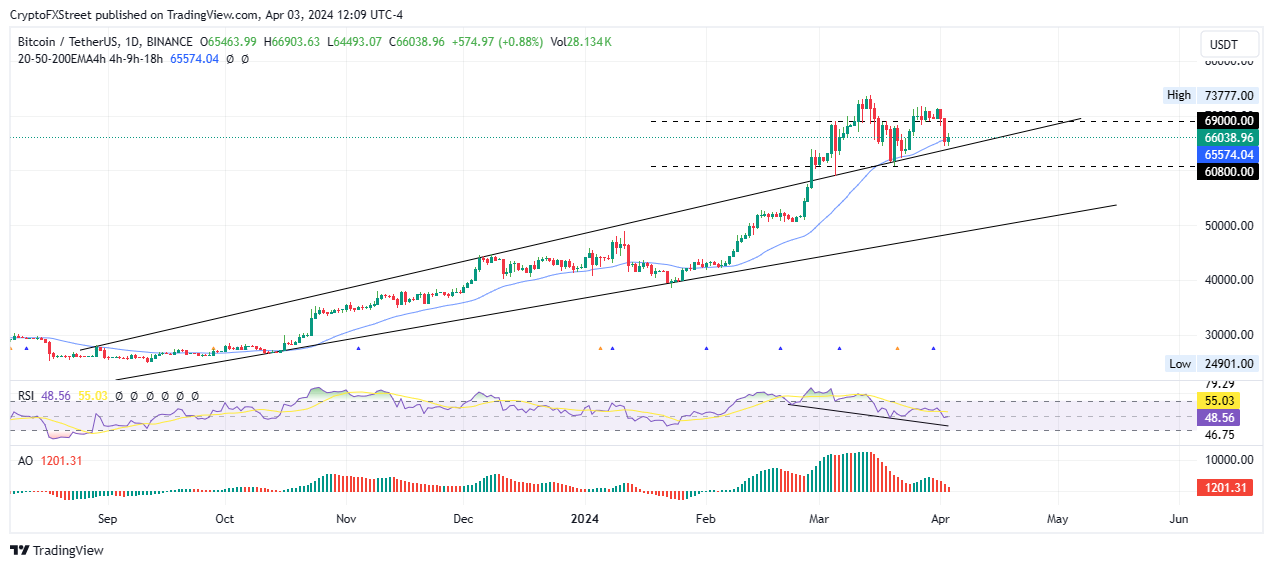
比特幣/美元一日圖

另一方面,如果守住200日EMA均線,則可能提振比特幣價格,推動其突破6.9萬美元。若多頭能夠維持在該位上方,則價格將持續上漲以收復73777美元的峰值,之後將錄得歷史新高。

作者

FXStreet Team

Composed of a group of economic journalists and FX experts, the FXStreet content team produces and oversees all content published on FXStreet. It provides a purely journalistic approach to the Forex market.


更多來自 FXStreet Team
分享:

編輯精選

AUD/USD sits at fresh 10-month lows, nears 0.6700

AUD/USD refreshes ten-month lows below 0.6750 and approaches 0.6700 in Wednesday’s Asian session. Fed rate-hike bets, along with fresh exchange of fire between the US and Iran, underpin the safe-haven US Dollar. Furthermore, the RBA’s dovish tilt weighs on the Aussie and the pair.

USD/JPY defends bids near 159.50 on hawkish BoJ Ueda

USD/JPY is defending bids near 159.50 in the Asian session on Wednesday, holding a three-day losing streak after hawkish commentary from BoJ Governor Ueda supports the Japanese Yen amid looming intervention risks. Meanwhile, escalating Middle East tensions revive US Dollar demand amid hawkish Fed bets, which could limit the pair's downside.


Gold stays deep in red below $3,800; Fed Minutes eyed

Gold sticks to intraday losses below the $3,800 mark in the European session on Wednesday, trading close to its lowest level since September 2025. Following last week’s hot US inflation reports, several Federal Reserve officials adopted a more hawkish tone and signaled further interest-rate hikes. Adding to this, Tuesday’s upbeat US data cemented market bets, which continue to act as a tailwind for the US Dollar, and drive flows away from non-yielding bullion.

Bitcoin stalls as ETF outflows mount ahead of Fed Minutes

Bitcoin stalls near $65,000 on Wednesday as buyers struggle to sustain a recovery from last week’s decline toward $62,000. Weakening institutional demand so far this week from BTC spot Exchange Traded Funds continues to weigh on sentiment.

Nvidia offers up double beat in third quarter

Nvidia (NVDA) shares jumped 3% afterhours as the leading AI chipmaker easily surpassed Wall Street's projections for the third quarter. The semiconductor powerhouse posted adjusted earnings per share of $2.68, 8.5% or $0.21 better than the consensus. Revenue of $115.85 billion clobbered the consensus by $7.1 billion or 6.6%.

Gold isn't being sold for thew reason most people think
Gold (XAU/USD) remains under heavy selling pressure on Monday, hitting its lowest level in 13 months. The precious metal is struggling to recover despite escalating geopolitical tensions in the Middle East, a backdrop that would normally encourage investors to seek protection in safe-haven assets. However, the main driver behind Gold's decline is not the geopolitical uncertainty itself.



