|

由於美元疲軟和地緣政治緊張局勢加劇,金價上漲超過1%

  • DXY下跌0.32%至100.31,因美國收益率下滑,提升了黃金等無收益資產的吸引力。
  • 特朗普暗示對中國徵收80%的關稅;市場為瑞士的關鍵貿易談判做好準備。
  • 印巴衝突升級,在全球風險厭惡中強化了避險資金流入。
由於美元疲軟和地緣政治緊張局勢加劇,金價上漲超過1%

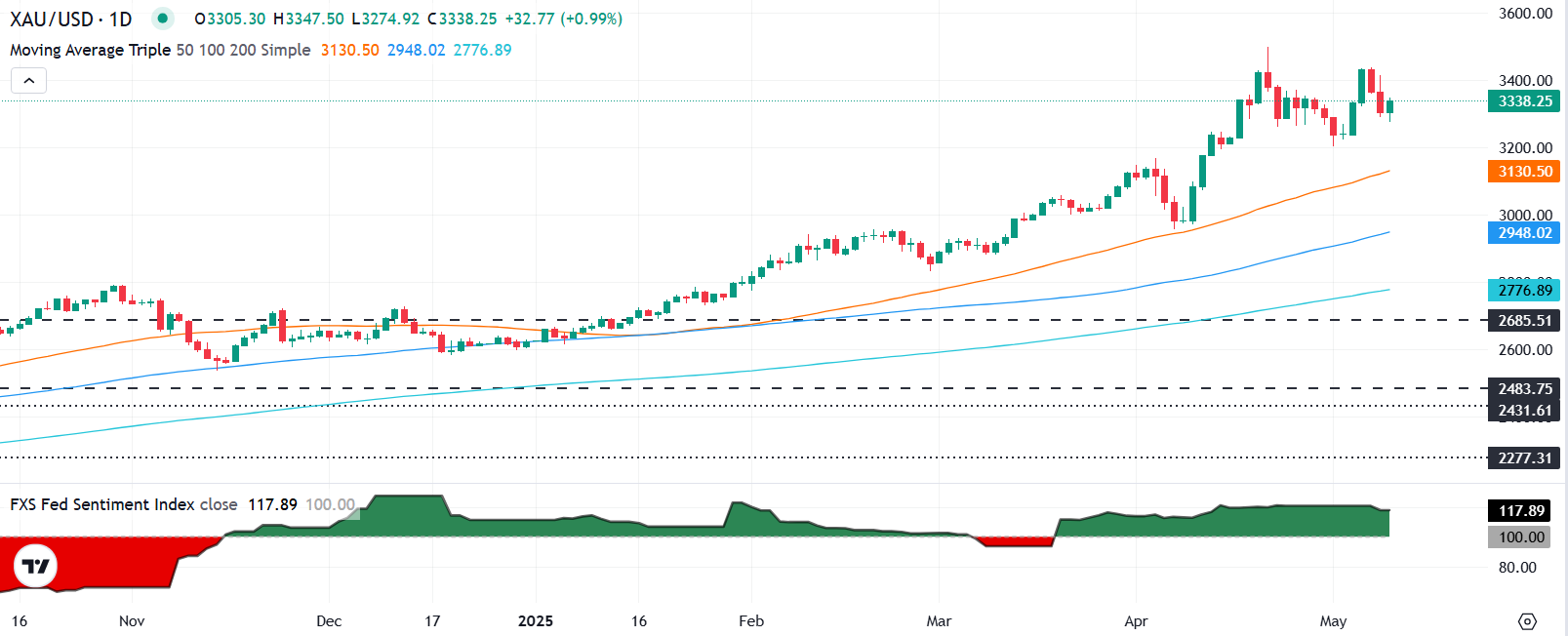
週五,黃金價格上漲超過1%,因美國美元(USD)在連續兩天上漲後回落,受到美國收益率下滑的影響。風險偏好的惡化推動了金條價格,地緣政治擔憂也在支撐著金價。截至發稿時,黃金/美元交易於$3,338。

華爾街錄得虧損,交易員為週六中美代表團在瑞士的會議做好準備。儘管市場對兩國貿易戰可能降溫的預期很高,但投資者在談判前仍保持謹慎。

美國總統唐納德·特朗普在週五的社交媒體帖子中表示,"對中國徵收80%的關稅似乎是正確的!交給Scott B。"

由於印巴之間的敵對行動加劇,金條價格保持高位。兩國在衝突的第三天互相指責使用無人機和炮火。

美元指數(DXY)追蹤美元對六種貨幣的價值,突破100.00大關,目前下跌0.32%至100.31,為黃金提供了順風。

週五,一系列美聯儲(Fed)官員發表了講話。官員們指出經濟不確定性和貿易政策風險,因為美國關稅容易引發通脹,並使中央銀行在平衡其雙重任務目標時面臨複雜局面。

每日市場動態摘要:黃金價格在低美國國債收益率的支撐下上漲。

  • 美國國債收益率在美聯儲週三的決定後上漲。美國10年期國債收益率保持在4.371%的堅挺水平。同時,美國實際收益率也穩定在2.81%,如美國10年期國債通脹保護證券收益率所示。
  • 世界黃金協會透露,中國人民銀行(PBoC)在4月份增加了2噸黃金儲備,連續第六個月增加。波蘭國家銀行(NBP)在4月份增加了12噸,達到509噸,而捷克國家銀行在4月份增加了2.5噸儲備。
  • 掉期市場目前已將美聯儲在7月會議上首次降息25個基點(bps)計入,並預計在年底前將再降息兩次。

XAU/USD技術展望:黃金價格重返$3,300以上

黃金價格反彈暫停,因金價回落至$3,400以下。然而,動能表明買家正在介入,正如相對強弱指數(RSI)所示,暗示無收益金屬可能在向$3,400進發的過程中測試下一個關鍵阻力位$3,350。

相反,若黃金在日線收盤低於$3,300,可能進一步回撤,這將暴露出5月1日的周期低點$3,202。
黃金 FAQs

黃金在人類歷史上發揮了關鍵作用,因為它被廣泛用作價值儲存和交換媒介。目前,除了它的光澤和用於珠寶之外,黃金還被廣泛視為避險資產,這意味著它被認為是動蕩時期的一項不錯的投資。黃金還被廣泛視為對沖通脹和貨幣貶值的工具,因為它不依賴於任何特定的發行方或政府。

各國央行是最大的黃金持有者。為了在動蕩時期支撐本國貨幣,各國央行傾向於使儲備多樣化,並購買黃金,以提高人們對經濟和貨幣實力的看法。高黃金儲備可以成為一個國家償付能力的信任來源。根據世界黃金協會的數據,各國央行在2022年增加了1136噸黃金儲備,價值約700億美元。這是有記錄以來最高的年度購買量。中國、印度和土耳其等新興經濟體的央行正在迅速增加黃金儲備。

黃金與美元和美國國債呈負相關,兩者都是主要的儲備資產和避險資產。當美元貶值時,黃金往往會上漲,使投資者和央行能夠在動蕩時期實現資產多元化。黃金與風險資產也呈負相關。股市的反彈往往會壓低金價,而風險較高的市場的拋售往往有利於黃金。

由於各種各樣的因素,價格可能會變動。地緣政治不穩定或對深度衰退的擔憂可能會迅速推高黃金價格,因其避險地位。作為一種低收益資產,黃金往往會隨著利率下降而上漲,而較高的資金成本通常會拖累黃金。盡管如此,由於資產以美元(XAU/USD)定價,大多數走勢取決於美元(USD)的表現。強勢美元傾向於控製金價,而弱勢美元則可能推高金價。

作者

Christian Borjon Valencia

Markets analyst, news editor, and trading instructor with over 14 years of experience across FX, commodities, US equity indices, and global macro markets.


更多來自 Christian Borjon Valencia
分享:

編輯精選

AUD/USD sits at fresh 10-month lows, nears 0.6700

AUD/USD refreshes ten-month lows below 0.6750 and approaches 0.6700 in Wednesday’s Asian session. Fed rate-hike bets, along with fresh exchange of fire between the US and Iran, underpin the safe-haven US Dollar. Furthermore, the RBA’s dovish tilt weighs on the Aussie and the pair.

USD/JPY defends bids near 159.50 on hawkish BoJ Ueda

USD/JPY is defending bids near 159.50 in the Asian session on Wednesday, holding a three-day losing streak after hawkish commentary from BoJ Governor Ueda supports the Japanese Yen amid looming intervention risks. Meanwhile, escalating Middle East tensions revive US Dollar demand amid hawkish Fed bets, which could limit the pair's downside.


Gold stays deep in red below $3,800; Fed Minutes eyed

Gold sticks to intraday losses below the $3,800 mark in the European session on Wednesday, trading close to its lowest level since September 2025. Following last week’s hot US inflation reports, several Federal Reserve officials adopted a more hawkish tone and signaled further interest-rate hikes. Adding to this, Tuesday’s upbeat US data cemented market bets, which continue to act as a tailwind for the US Dollar, and drive flows away from non-yielding bullion.

Bitcoin stalls as ETF outflows mount ahead of Fed Minutes

Bitcoin stalls near $65,000 on Wednesday as buyers struggle to sustain a recovery from last week’s decline toward $62,000. Weakening institutional demand so far this week from BTC spot Exchange Traded Funds continues to weigh on sentiment.

Nvidia offers up double beat in third quarter

Nvidia (NVDA) shares jumped 3% afterhours as the leading AI chipmaker easily surpassed Wall Street's projections for the third quarter. The semiconductor powerhouse posted adjusted earnings per share of $2.68, 8.5% or $0.21 better than the consensus. Revenue of $115.85 billion clobbered the consensus by $7.1 billion or 6.6%.

Gold isn't being sold for thew reason most people think
Gold (XAU/USD) remains under heavy selling pressure on Monday, hitting its lowest level in 13 months. The precious metal is struggling to recover despite escalating geopolitical tensions in the Middle East, a backdrop that would normally encourage investors to seek protection in safe-haven assets. However, the main driver behind Gold's decline is not the geopolitical uncertainty itself.